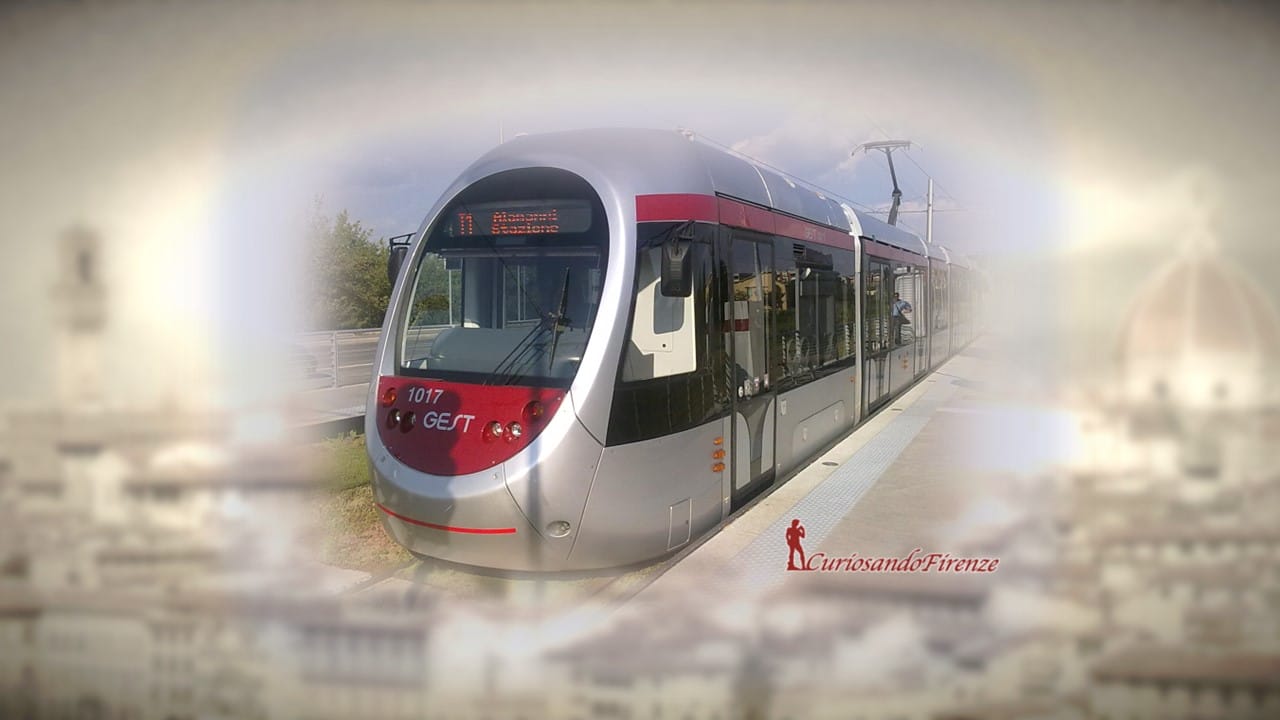
Public transport in Florence began in the late 1800s with horse-drawn carriages. It quickly evolved into an extensive network of electric trams that defined the city’s mobility until after World War II.
Key Milestones
-
1950s: The historic tram system was dismantled and replaced by buses, which were considered more modern at the time.
-
2012: ATAF was privatized and sold to a group led by Busitalia (part of the State Railways Group), ending purely municipal management.
Transport Today
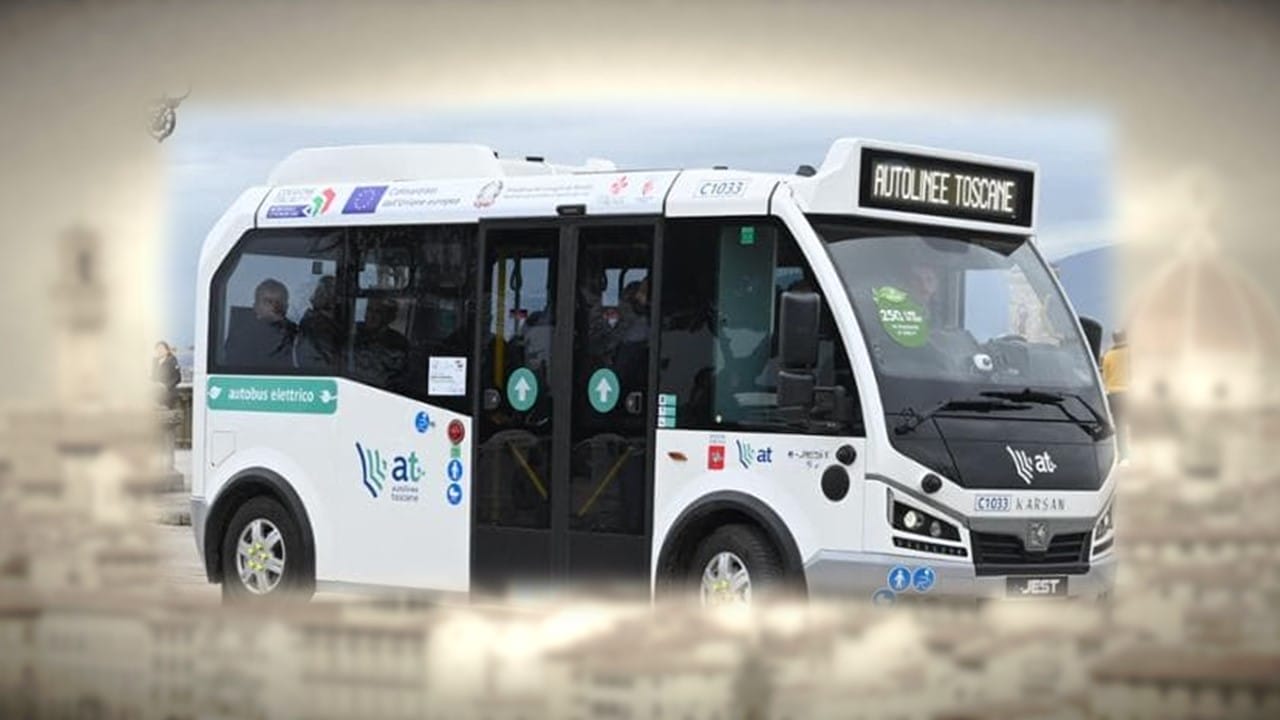
Since 2021, the regional service has been unified under a single operator: Autolinee Toscane (part of the RATP Dev group).
The modern system is built on the integration of two main components:
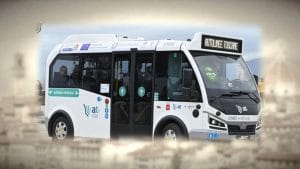
Buses: Managed by Autolinee Toscane, with a fleet currently being upgraded to electric vehicles.
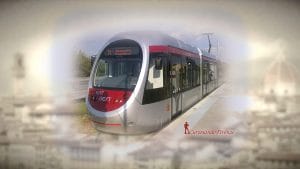
Tramway: Managed by GEST. This new tram network has transformed the city by connecting key hubs such as the Peretola Airport, Santa Maria Novella train station, and Careggi Hospital.
Florentines used to refer to public transport as “i’ tranvai” (the tram) or “l’ataffe” (the bus).
The distorted term “ataffe” originates from ATAF, the historic company that managed transportation in Florence starting in 1945. This company was established immediately after the Second World War to reorganize the movement of citizens within the city.
Before buses and ATAF, public transport was managed by various different companies. The very first was a Belgian company at the end of the 19th century.
At that time, the vehicles did not have engines: they were horse-drawn carriages that ran on tracks. These first “horse-drawn trams” were a true revolution for the city, as they allowed people to travel much faster than they could on foot.
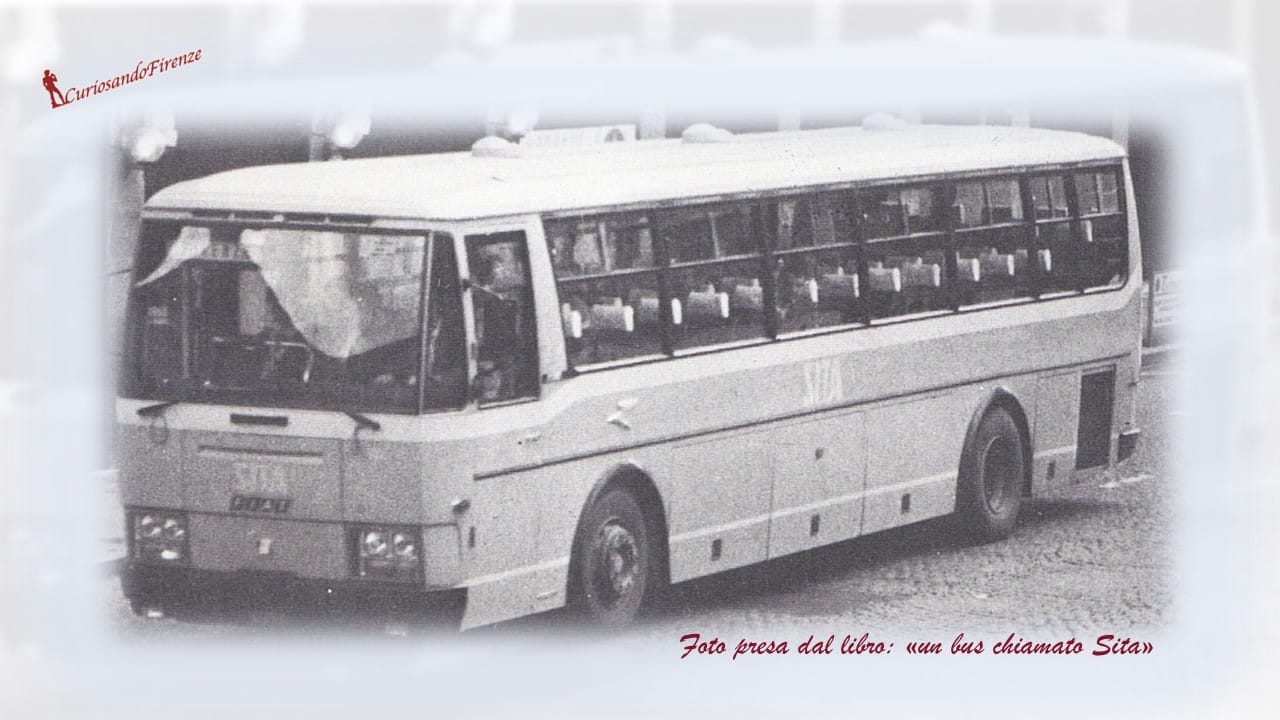
The history of public transport in Tuscany is closely linked to SITA (Società Italiana Trasporti Automobilistici). This historic company managed the suburban connections between the city of Florence and its province.
Fiat founded SITA in September 1912. The goal was to use buses for mass transit, which was a major innovation for that period. SITA’s service was vital for the region because it connected small villages to the city and also transported mail. These buses linked isolated hamlets to the main railway stations.
SITA was so significant that its name became a common term. People used the word “Sita” as a generic term for the suburban bus. It was normal to say, “I’m waiting for the Sita” instead of “I’m waiting for the bus.” This demonstrates how famous and reliable the company was for the people of Tuscany.
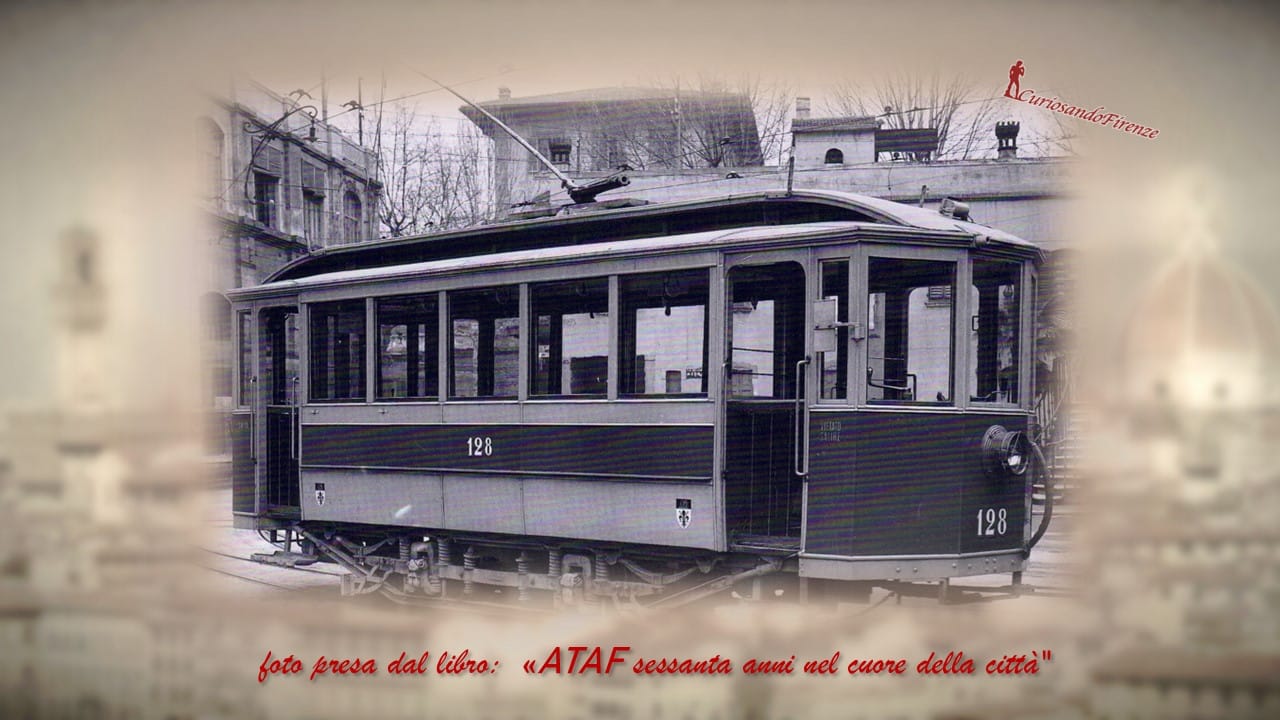
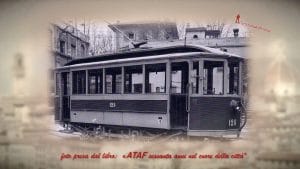
“YEAR 1938, Thomson-Houston tramcar rebuilt in the 1930s with a ‘short body’,
in service with the ATAF company.”
In 1945, Italy had just emerged from a devastating conflict. The stadium (known at the time as “Stadio Comunale,” today the Franchi) and the Fiorentina football team represented one of the few forms of collective escape. Seeing people hanging “in clusters” (a grappolo) from the tram doors was not merely a logistical necessity, but a sign of an irrepressible vitality that overcame the scarcity of means.
(Foto: copyright ©Archivio Foto Locchi www.fotolocchi.it)
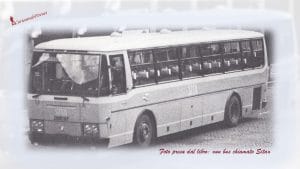
Presented in the late 1950s (the prototype dates back to 1957) by Aerfer—a company also active in the aviation industry—the Metropol was not your typical “London-style” double-decker bus. It featured sleek, sharp lines, expansive windows, and a lightweight alloy load-bearing structure derived directly from aircraft construction technologies.
Although initially designed for several cities, it was Florence’s ATAF that became inextricably linked to this model. Approximately 30 units entered service starting in 1961.
“Today, seeing a bus (especially a line 25!) parked right under Palazzo Vecchio or in front of the Loggia dei Lanzi would seem like an urbanistic sacrilege. In 1962, however, it was the pinnacle of civic pride. Piazza della Signoria was the city’s ‘formal parlor,’ and using it as a showroom was a way of telling Florentines: ‘Look at how modern we are becoming.'”
(Foto: copyright ©Archivio Foto Locchi www.fotolocchi.it)
This image is an extraordinary historical document that tells a story of everyday heroism and pioneering spirit in transport. It depicts a SITA (Società Italiana Trasporti Automobilistici) bus in the 1920s, either stuck or surrounded by towering walls of snow on the pass between Val d’Orcia and Monte Amiata.
A Sita Fiat 635 bus in Piazza Ognissanti during the post-war period, operating on the Florence–Siena line.
The Fiat 18 BL was originally created as a heavy military truck. It served as the logistical backbone of the Royal Italian Army during World War I, earning a reputation for being indestructible on the challenging Alpine fronts. Once the war ended, thousands of these chassis were repurposed.
When SITA began operating in the inaccessible areas of Tuscany and Veneto, it needed vehicles capable of tackling unpaved roads, prohibitive gradients, and mud. The 18 BL was the perfect fit!
“Seeing the traffic in Piazza Duomo in 1953 always comes as a shock—almost a ‘culture shock’ for those used to seeing it as a pedestrian zone today. We are at the entrance of Via Calzaiuoli, right in front of the Loggia del Bigallo.”
“Florence, early 1920s: a snapshot with the scent of the avant-garde. Europe’s very first bus station was born here in Via Maso Finiguerra, established by SITA. A time when road travel was an adventure toward the future, set in the beating heart of a city that never stops innovating.”
Circa 1896: a horse-drawn omnibus passes through Via Martelli. Florence was in the midst of the transition from animal traction to electric power. These omnibuses were often slow and noisy on the stone pavement, yet they represented the first true attempt to democratize urban travel.
In 1986, the true “workhorse” of the SITA fleet in Florence—and across much of Italy—was undoubtedly the Fiat 370.
The 1920s, Futa Pass. A panoramic view of Santa Lucia, on the Florence-Bologna route. Tuscany and Emilia are brought closer together thanks to Sita services.
“SITA postal buses parked at the Muraglione Pass in the Tuscan-Romagnolo Apennines (Florence – Bologna route).”
“Early 1900s, Lungarno Diaz in Florence.”
“SITA bus employed on the Florence – Bologna line.”
“YEAR 1937, ATAF vehicle no. 2017, Line G, Piazza San Marco – Ponte Rosso – Bolognese – Trespiano.”
“YEAR 1948, Line 17 San Gervasio – Piazza Puccini, vehicle rebuilt in Florence by the Lotti Workshops located in via Cittadella.”
“YEAR 1935
“Le Cure” Depot, number 58 about to enter service.”
“ATAF vehicle no. 2204, Line 7, Piazza San Marco – Fiesole.”
“YEAR 1937, vehicle undergoing trials on the road to Settignano during the early years of the trolleybus line. Vehicle no. 2012.”
“YEAR 1936 Vehicle number 119, at Le Cure Depot.”
“YEAR 1962…
Route 11 via Fibonacci, Due Strade.
New vehicle, on display in Piazza della Signoria.”
(Foto: copyright ©Archivio Foto Locchi www.fotolocchi.it)
“The Fiat 410 represented the transition from the ‘heroic’ public transport of the post-war era to modern mass transit. It remained in service until the early 1990s, when it was progressively replaced by newer models such as the Iveco Effeuno.”
“Route 7 from Piazza Duomo to Fiesole.
1970s trolleybus stationed at the depot.
ATAF vehicle no. 2020.”
“Bus in service in Florence during the 1960s, ATAF vehicle no. 2733.”
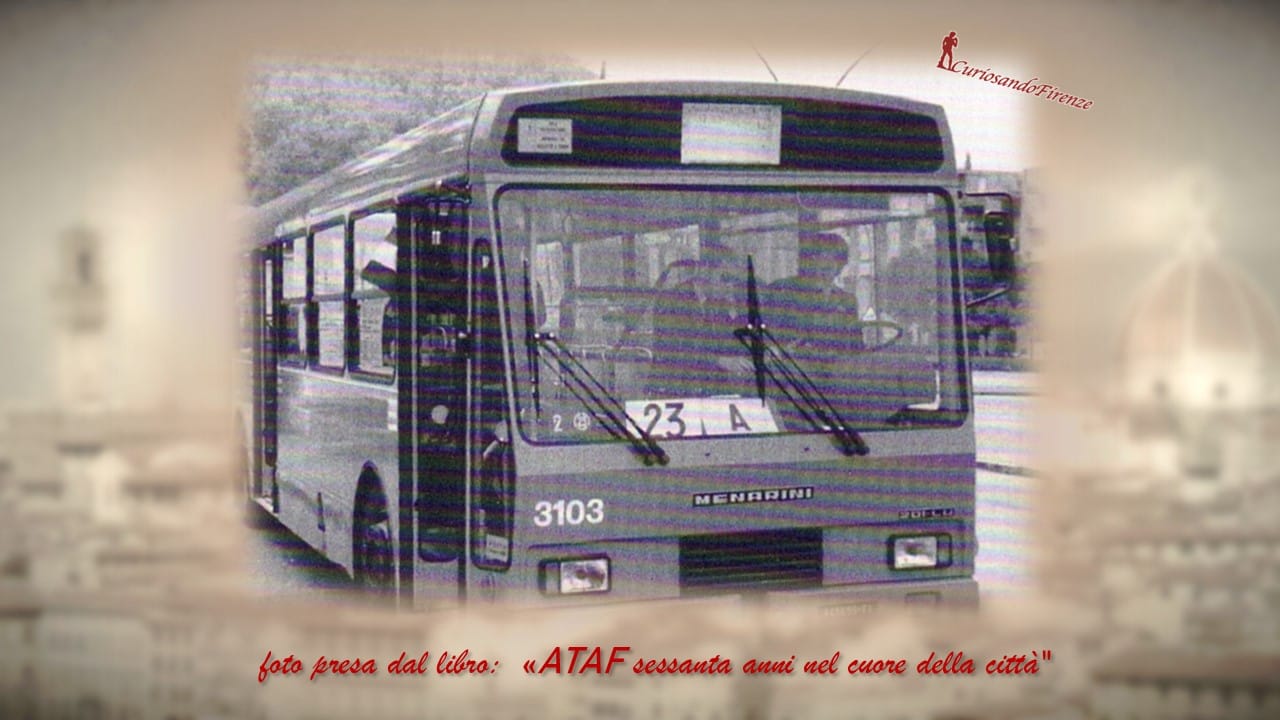
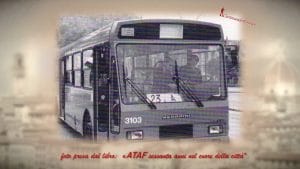
“Route 23A to Sorgane, year 1980.”
“February 1953, Piazzale Michelangelo. Presentation of the three-axle bus.”
“YEAR 1950, ATAF vehicle number 3008,
LINE L PIAZZA STAZIONE – VIA DEL PRETE
Fiat 672 Cansa trolleybus.”
“YEAR 1948, Company vehicle number 133,
Overall vehicle length exceeding 20 metres.”
“‘Notti Magiche’ (Magic Nights) on wheels: a dive back into 1990 with this SITA Domino GTS Orlandi. The special livery dedicated to the World Cup was more than just a graphic design; it was the symbol of an Italy racing toward the future. A perfect encounter between Emilian coachbuilding and our country’s history.”
“Sixty years of history in a single glance. From the glorious 633 of the 1930s to the Domino GTS Orlandi of the 90s: the evolution of the Sita tradition between the classic and the modern.”