
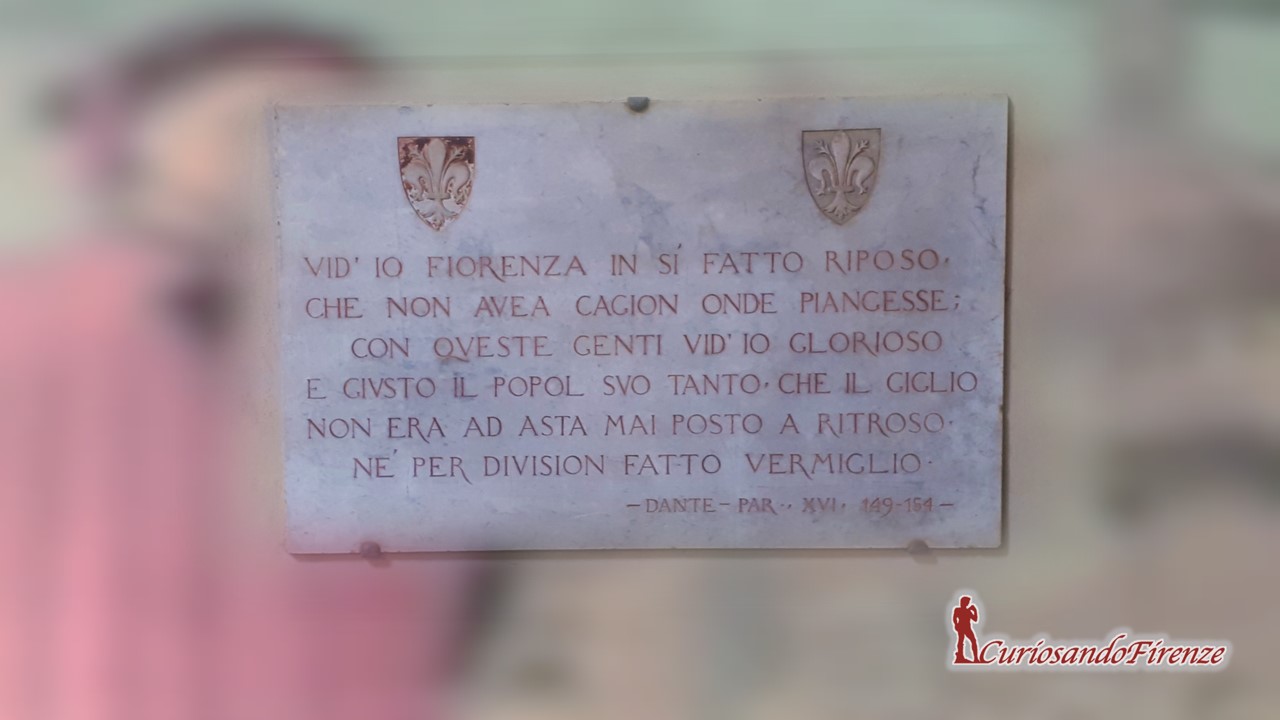
This plaque is located in the courtyard of Palazzo Vecchio.
Paradiso – Canto XVI – vv 149 – 154
“VID’IO FIORENZA IN Sì FATTO RIPOSO.
CHE NON AVEA CAGION ONDE PIANGESSE;
CON QVESTE GENTI VID’IO GLORIOSO
E GVSTO IL POPOL SVO TANTO, CHE IL GIGLIO
NON ERA AD ASTA MAI POSTO A RITROSO,
Nè PER DIVISION FATTO VERMIGLIO:”
“I saw Florence in such a state of serenity that she had no reason to complain or weep. I saw her people so honorable and esteemed that the Lily (the city’s symbol) had never been displayed upside down on the staff (as a sign of defeat or infamy), nor had it ever been made red (changed in color) due to internal divisions.”
“This is a description of Florence in an era of perfect peace and tranquility (riposo), knowing none of the mourning or discord that would later afflict her. The people were honored and respected thanks to the valor of the ancient, virtuous families mentioned previously. Florence was so strong and respected that she had never suffered such humiliation.
-
The Lily (Il Giglio): The most ancient coat of arms of Florence was a white lily on a red field.
-
The Change of Colors: Due to the struggles between Guelphs and Ghibellines, the Guelphs (who were victorious in 1251) wished to distinguish themselves and reversed the colors, adopting the red lily on a white field.
The Canto closes with this powerful image of a lost Florence: a city where even the symbol of the homeland has been stained and altered by the blood of civil strife.”


