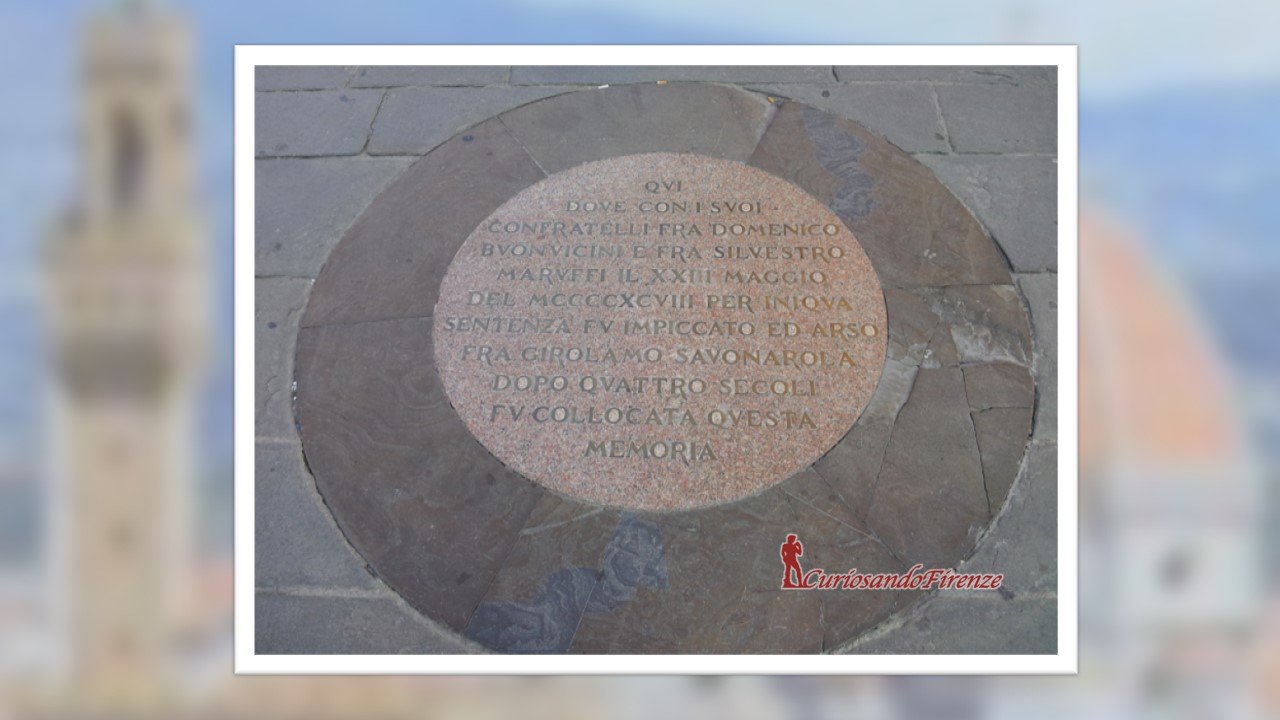
A solemn commemorative plaque in Piazza della Signoria marks the spot where, on May 23, 1498, Friar Girolamo Savonarola—alongside his brothers Domenico Buonvicini and Silvestro Maruffi—was hanged and burned following an “unjust sentence.”
Savonarola was a central and controversial figure of the Florentine Renaissance. A Dominican friar and influential preacher, he became famous for his fiery, apocalyptic sermons directed at the perceived corruption of the Church and the ruling elite. Opposed to the luxury and frivolity of Medicean Florence, he advocated for a radical moral and spiritual renewal of the city.
This crusade culminated in the infamous “Bonfires of the Vanities.” During these public events, items deemed sinful or vain—such as fine clothing, jewelry, cosmetics, mirrors, and even priceless works of art (including paintings by Sandro Botticelli) — were cast into the flames.
His radicalism and the establishment of a short-lived theocratic republic brought him into direct conflict with the Medici family and the Papacy. In 1497, he was excommunicated by Pope Alexander VI. By the following year, his political influence had collapsed; he was arrested, tried, and ultimately executed for heresy and sedition. The burning of his body in Piazza della Signoria marked the end of his fervent but brief moral reign over Florence.