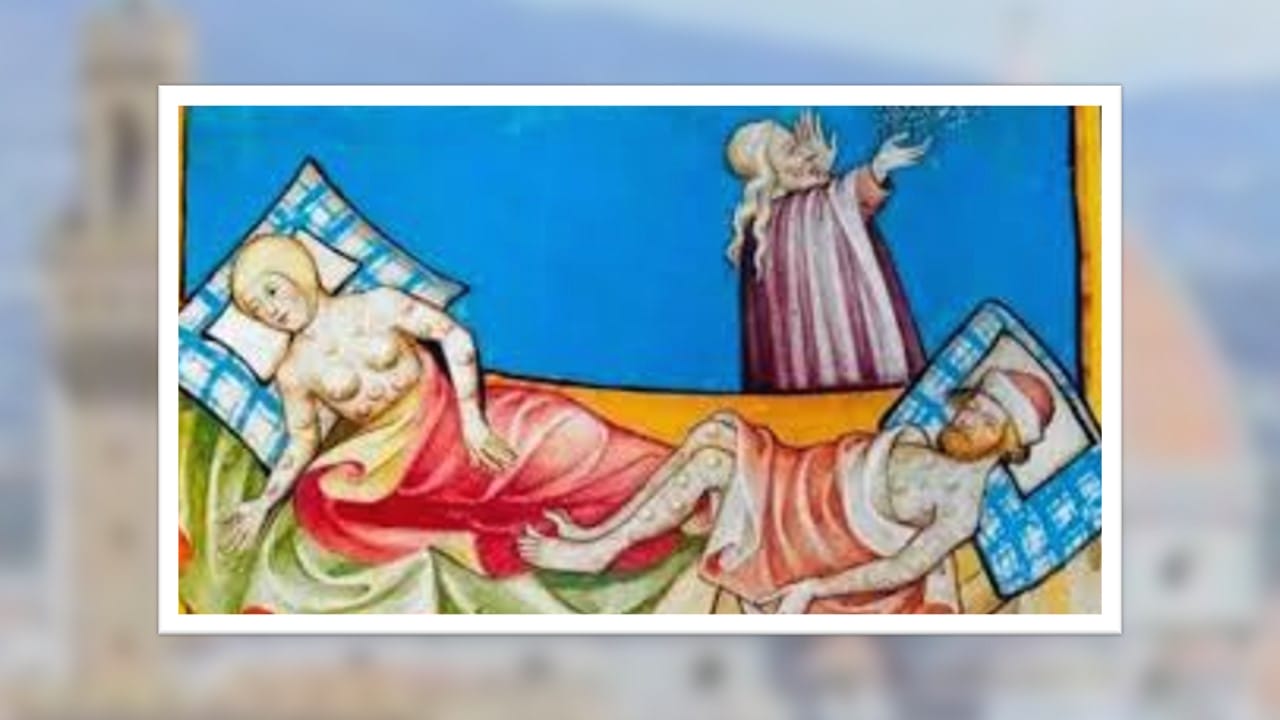
The Black Death of 1348 was more than a medical disaster; it was a “history accelerator.” It killed about 60% of the population in Florence, forcing the survivors to completely reinvent their society.
The famous writer Giovanni Boccaccio used the plague as the setting for his masterpiece, the Decameron. In the story, ten young people flee to the hills to escape the disease. They try to build an “ideal society” through storytelling and art, choosing life and beauty over the horror of death in the city.

The plague even changed how people did business. The “Wine Windows“ (Buchette del Vino), which you can still see in the walls of Florentine palaces, were a clever invention for health safety. Noble families used these small openings to sell wine without touching the customers—a 14th-century version of social distancing.
While many fled, the Misericordia (a charitable organization) stayed to help. Members wore iconic black robes to remain anonymous while they transported the sick and buried the dead. This spirit of civic courage and solidarity is still a vital part of Florence’s identity today.
The plague caused a strange economic shift. Because so many people died, the remaining wealth was concentrated in fewer hands. The survivors felt a new, urgent need to celebrate life. This extra money and the desire for beauty provided the financial and cultural “spark” that eventually started the Renaissance.