Florence holds a position of fundamental importance along the course of the Arno River. Unfortunately, this geographical location has exposed the city to a constant risk: it has been flooded multiple times, causing extensive and often catastrophic damage. These flood events have not only left deep wounds in the urban fabric but have also shaped the collective memory of the Florentine people.
Below are some of the most significant and devastating historical floods in Florence:
-
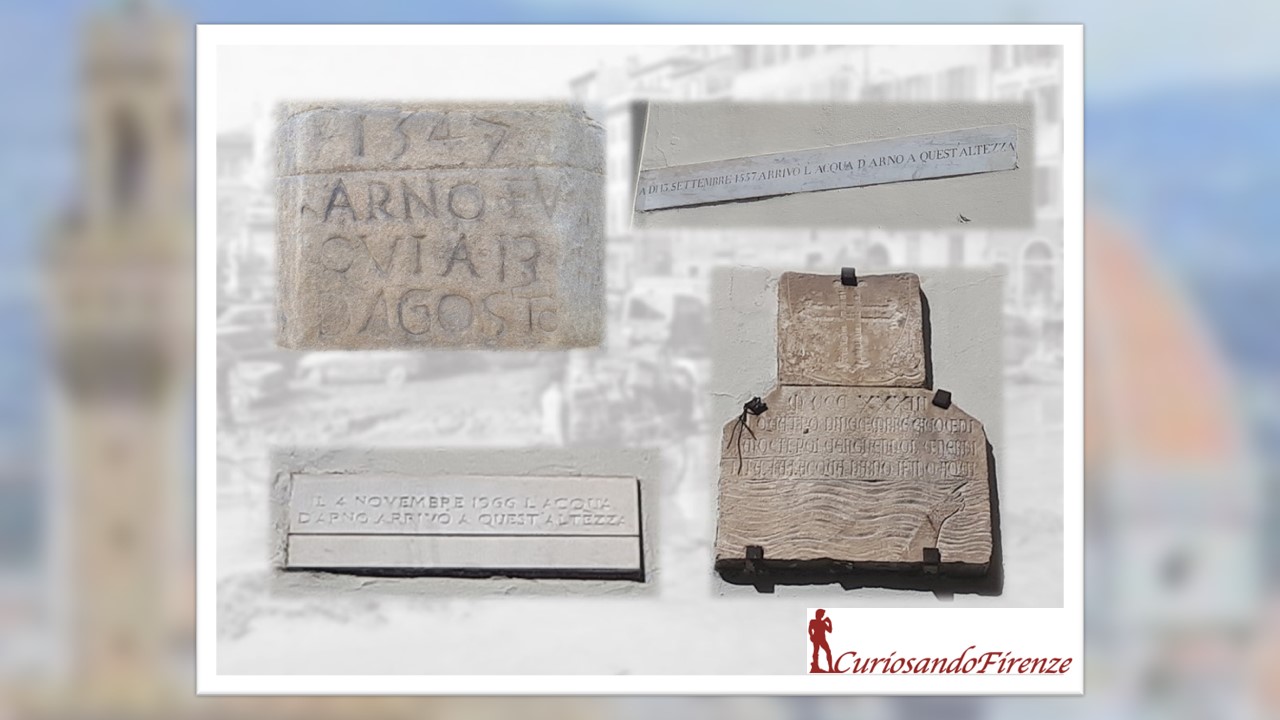
August 13, 1547: Although less known than others, this flood was still destructive. A plaque commemorating the event, when the river broke into the inhabited center, was placed in Via delle Casine.

-
September 13, 1557: A decade later, the fury of the Arno struck Florence once again. A commemorative plaque was placed in Piazza Santa Croce.

-
November 3, 1844: In the 19th century, a new surge proved extremely damaging. The force of the water and mud overwhelmed streets and workshops; this flood was one of the most severe of the century, leaving a lasting mark on the collective memory before the definitive event of the 1900s. A plaque witnessing the catastrophe was placed in Via San Remigio.

-
November 4, 1966: This date is indelibly etched into the national consciousness. The 1966 flood is considered the most devastating of the modern era, an event that completely paralyzed Florence and caused incalculable damage to its global artistic heritage. The waters, thick with fuel oil and mud, reached unprecedented levels. The tragedy of ’66 was not just a natural disaster, but a global cultural emergency that mobilized thousands of “Mud Angels” (Angeli del Fango) from all over the world to save submerged masterpieces. (Commemorative plaques can be found scattered across many walls throughout the city).

These historical events serve as a constant reminder of the city’s fragility and the importance of its perennial struggle against the untamed force of the Arno River.