
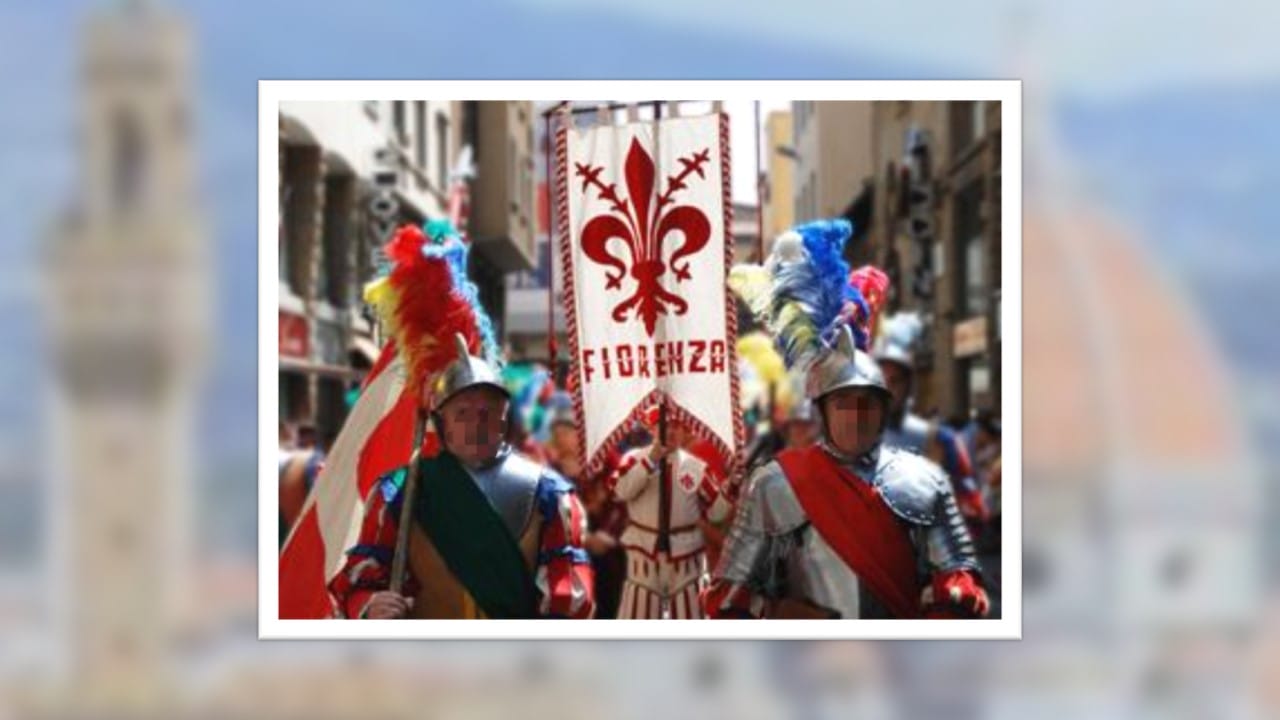
The Historical Parade (Corteo Storico) is not just a show for tourists; it is a living symbol of Florence’s political identity. It honors the Siege of 1530, when the city bravely resisted the Imperial troops of Charles V.
The Heart of the Tradition: Calcio Storico The parade is deeply linked to Calcio Storico (historic football). On February 17, 1530, while the city was under attack, the people of Florence played a match in Piazza Santa Croce. This was an act of defiance to show the enemy that their spirit was not broken. Today, the parade continues to celebrate that courage.
Who Marches in the Parade? Every person in the parade represents a part of the old Republic:
-
The Gonfaloniere di Giustizia: The highest civil authority leading the group.
-
Musicians and the “Arti”: Representing the guilds (merchants and craftsmen) who were the economic heart of the city.
-
Soldiers (Armigeri): A reminder that the city’s freedom was protected by its own citizens.
-
The “Madonne”: Noble women who represent the grace and refinement of Renaissance society.
True to History What makes this parade special is its historical accuracy. The costumes are not just theater props; they are perfect replicas of 16th-century clothing made with high-quality fabrics like velvet and silk. When people march, they are literally “wearing history.”
A Symbol for Today During major city festivals, such as the Scoppio del Carro or St. John’s Day, the sound of the trumpets (chiarine) and drums reminds everyone that Florence is more than a museum. It is a community that still lives by the values of its ancient Republic.


